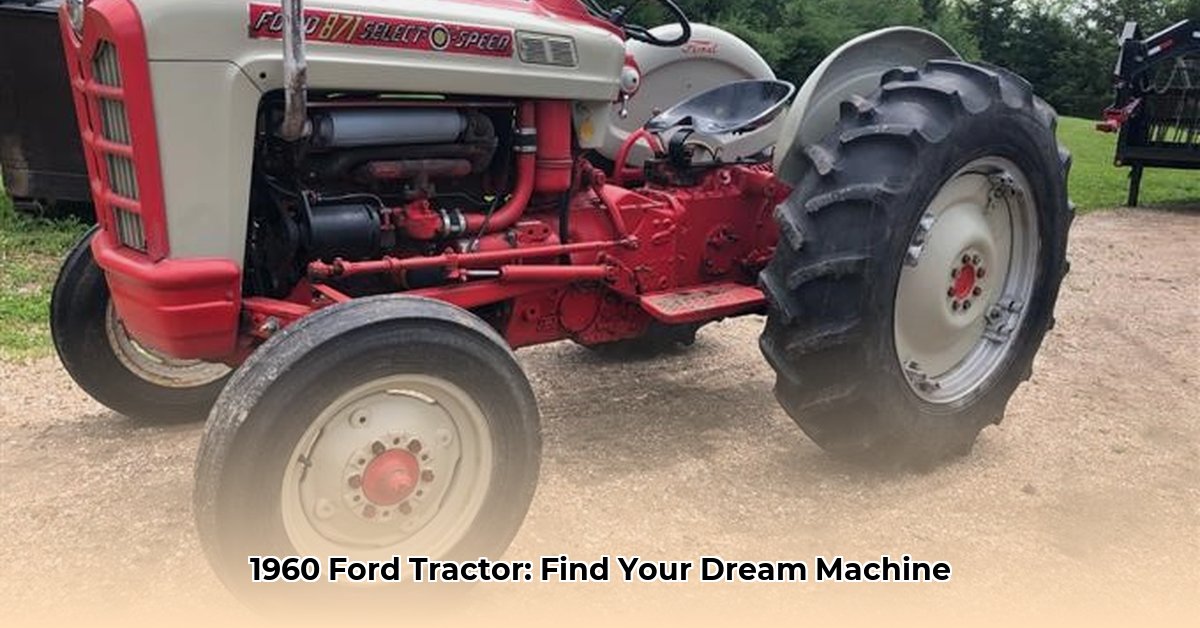
Ever dreamt of owning a piece of agricultural history? Imagine the satisfying rumble of a 1960 Ford 601 Workmaster, a classic tractor as much a work of art as a machine. This guide is your key to entering the world of vintage tractors, whether you're a seasoned collector or a curious newcomer. We'll navigate the process from initial research to restoration and purchasing, ensuring you're equipped to make an informed decision. For more Ford tractor resources, check out this helpful website: Ford Tractor Resources.
The 1960 Ford 601 Workmaster: A Timeless Icon
The 1960 Ford 601 Workmaster stands as a testament to robust engineering and enduring design. Its powerful engine, sturdy build, and relatively simple mechanics made it a farmer's favorite. Beyond its functionality, however, lies its appeal to collectors. This tractor represents a significant milestone in Ford's agricultural legacy, and its timeless design resonates with many enthusiasts today. It's a piece of living history, whispering stories of hard work, innovation, and the evolution of American agriculture. Aren't you curious to learn more about this fascinating piece of our past?
Technical Specifications and Historical Context
The 1960 Ford 601 Workmaster wasn't just a pretty face; it was a powerhouse. Boasting a [insert engine displacement here] engine generating approximately [insert horsepower here] horsepower, this machine, coupled with its [insert transmission type here] transmission, provided the strength and adaptability essential for a wide range of farming tasks. Understanding its place within Ford's tractor lineage and its role in the technological advancements of the 1960s adds depth to the appreciation of this machine.
Navigating the Market: Value and Pricing
The price of a 1960 Ford 601 Workmaster is highly variable, much like classic cars. Condition is paramount. A flawlessly restored, original tractor in pristine shape commands a significantly higher price than one requiring extensive repairs or modifications. Key factors influencing value include the tractor's overall condition (both mechanical and cosmetic), originality (the percentage of original components remaining), and current market trends for collector vehicles and vintage machinery. A robust economy, for instance, typically elevates prices. Is original paint worth more, or is an impeccable restoration equally desirable? The market informs these answers.
Restoring Your Tractor: A Practical Guide
Restoring a classic tractor is both rewarding and challenging, a journey requiring patience, skill, and a realistic budget. This guide provides a high-level overview:
Assessment: Begin with a meticulous inspection. Document everything – taking copious photographs – noting mechanical issues, cosmetic damage, and missing parts. This forms the bedrock of your restoration plan.
Parts Sourcing: This phase often proves the most time-consuming. Original parts are rare and costly. Explore online forums, salvage yards, and specialized parts suppliers. Reproduction parts are an option, but quality can be inconsistent.
Disassembly: Carefully dismantle the tractor, meticulously labeling and storing each component. Photography at each stage is crucial.
Restoration: This focuses on cleaning, repairing, and repainting individual parts. Some tasks are DIY-friendly, while others necessitate professional expertise, especially with engine work or complex mechanical systems.
Reassembly: Reassemble your tractor meticulously, referencing your detailed documentation. Double-check every component to ensure proper functioning.
Testing: Following reassembly, rigorously test all systems to validate functionality.
Budgeting for Restoration: A Financial Overview
Restoration is an investment. Costs will vary based on the tractor's starting condition, part availability, and the desired level of restoration. A possible cost breakdown:
| Factor | Potential Cost (USD) | Notes |
|---|---|---|
| Parts | $1,000 - $10,000+ | Original parts are expensive and scarce; reproduction parts vary in quality. |
| Labor | $5,000 - $20,000+ | Professional mechanics are costly, but their expertise is often essential. |
| Specialized Tools | $500 - $2,000+ | Renting specialized tools can be cost-effective. |
| Paint & Materials | $500 - $2,000+ | A professional paint job ensures a high-quality finish. |
Purchasing Your 1960 Ford 601: A Buyer's Checklist
A meticulous inspection is crucial. Here's the checklist:
- Engine: Perform a compression test to gauge engine health.
- Transmission: Verify smooth and reliable shifting.
- Hydraulics: Check for leaks in lines and components.
- Corrosion: Assess rust and corrosion levels – these impact value significantly.
- Originality: Collectors favor tractors with original components.
Negotiate the price. Research comparable sales for a fair market value. Don't hesitate to walk away if the deal is unfavorable.
Is it a Sound Investment? A Collector's Perspective
Investing in a classic tractor like the Ford 601 Workmaster combines passion with potential profit. While vintage tractor values generally appreciate, it's not a guaranteed investment. Factors like market trends, condition, and restoration needs shape its final worth. However, for classic machinery enthusiasts, the rewards likely outweigh the challenges. It's a tangible piece of history with potential for long-term appreciation. It is also a personal project brimming with satisfaction.
Sourcing Parts: A Strategic Approach
Locating parts for a classic tractor restoration can seem daunting, but with a strategic approach, it's manageable.
1. Assess Your Needs: Create a detailed parts list, prioritizing essential components. Photographs of needed parts will assist.
2. Explore Options:
Online Marketplaces: Websites specializing in vintage tractor parts, such as Yesterday’s Tractors (https://www.yesterdaystractors.com/), are excellent resources.
Local Dealers and Salvage Yards: These sources may offer used or surplus parts.
Ford Forums and Clubs: Online communities are invaluable for advice, supplier recommendations, and part exchanges.
Online Auction Sites: Platforms like eBay can offer parts, but thorough inspection of descriptions and images is critical.
3. Repair vs. Replace: Prioritize repairing existing components whenever feasible. Replacement is sometimes necessary, especially for safety-critical parts.
Remember, restoring a 1960 Ford 601 Workmaster is a journey. Enjoy the process!